
Does your electric geyser feel like a money-guzzling monster? You’re not alone. According to the National Energy Efficiency & Conservation Authority (NEECA), water heating accounts for 25–40% of a household’s electricity bill—and outdated habits or inefficient systems are often to blame.
But here’s the good news: with a few smart tweaks, you can slash your energy use and keep enjoying hot showers.
In this guide, we’ll share 10 expert-approved strategies to optimize your electric geyser, compare it to alternatives like gas geysers, and introduce you to solar water heaters from Eimex Solar—a game-changer for eco-conscious homeowners. Let’s turn down the heat on your bills!
How Electric Geysers Work: The Energy Drain Explained
What Makes an Electric Geyser Energy-Intensive?
Electric geysers work like giant kettles: a heating element warms water stored in an insulated tank.
Sounds simple, right? The problem? Standby heat loss. Even when idle, geysers continuously reheat water to maintain the set temperature, especially if poorly insulated.
For example, a standard 150-liter geyser with a 3kW element running for 2 hours daily consumes 6 kWh of electricity. Over a month, that’s 180 kWh—enough to power an LED TV for 1,500 hours!
Electric Geyser vs. Gas Geysers: Which is Better?
Gas geysers heat water on-demand, saving energy since there’s no storage tank. They’re cheaper to run (Rs.2–3 per liter of LPG vs. Rs.8–10 per kWh for electricity) but come with downsides:
- Safety risks: Gas leaks or improper ventilation can be hazardous.
- Higher maintenance: Burners and valves need regular checks.
- Dependency on LPG: Prices fluctuate, and supply can be unreliable.
Electric geysers, while pricier to operate, are safer, easier to install, and ideal for homes without gas lines. For the best of both worlds, though, solar water heaters (like Eimex Solar’s hybrid models) are the ultimate upgrade.
10 Expert Tips to Save Electricity with Your Electric Geyser
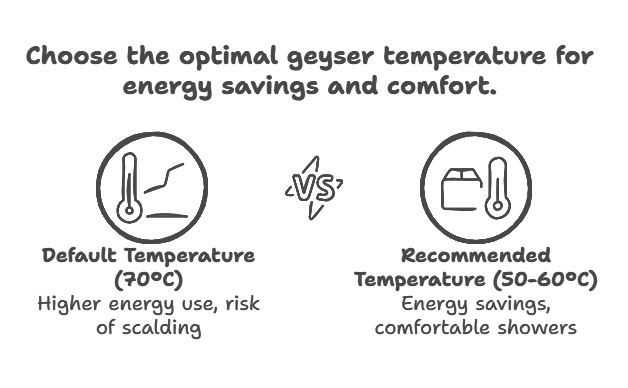
1. Optimize Temperature Settings (50–60°C is Sweet Spot)
Most geysers default to 70°C, but you only need 50–60°C for comfortable showers. Lowering the temperature by 10°C can cut energy use by 5–10%. Use a thermometer to check your tap water—if it’s too hot to touch, dial it down!
2. Install a Timer: Stop 24/7 Heating
Why pay to heat water while you’re at work or asleep? A Rs.500–Rs.1,000 timer can automate your geyser to run only during mornings (6–8 AM) and evenings (6–8 PM). Over a year, this habit alone can save Rs.3,000–Rs.5,000 on bills.
3. Insulate Your Geyser and Pipes
Up to 45% of a geyser’s heat escapes through uninsulated tanks and pipes. Here’s how to fix it:
- Wrap the geyser in a thermal blanket (Rs.1,000–Rs.2,000).
- Cover hot water pipes with foam tubing (Rs.200/meter).
- Result? Faster heating times and 20–30% lower bills.
4. Switch to a Solar Water Heater (Eimex Solar’s Specialty)
Solar water heaters use rooftop panels to absorb sunlight, heating water for free and slashing grid dependency by 50–70%. Eimex Solar’s systems are perfect for sunny climates:
- Flat-plate collectors: Affordable and durable (ideal for moderate climates).
- Evacuated tube collectors: High efficiency, even in cloudy weather.
- Hybrid models: Combine solar with electric backup for rainy days.
👉 “Our customers save Rs.18,000+ yearly with solar geysers.” — Eimex Solar Team
5. Upgrade to an Energy-Efficient Geyser
Old geysers waste power. Modern models with BEE 5-star ratings (like Eimex Solar’s EcoHeat Pro) feature:
- Advanced glass-lined insulation.
- Smart Wi-Fi controls to schedule heating.
- Auto-shutoff when water reaches the set temperature.
- Switching can reduce energy use by 30–40%.
6. Fix Leaks Immediately
A dripping hot water tap wastes 1,000+ liters monthly—that’s like pouring Rs.500 down the drain! Replace worn-out washers or valves ASAP.
7. Shorten Shower Time
Cutting your shower from 15 to 10 minutes saves Rs.1,000+ monthly for a family of four. Use a waterproof timer or play a 10-minute playlist to keep track!
8. Use Off-Peak Electricity Hours
Many states offer lower tariffs at night (e.g., 10 PM–6 AM slots). Heat water during these hours to save Rs.2–3 per kWh.
9. Install Low-Flow Showerheads
Standard showerheads use 12–15 liters/minute. Low-flow models (6–8 liters/minute) reduce hot water demand by 40% without compromising pressure.
10. Schedule Annual Maintenance
- Descale the tank: Hard water leaves mineral deposits that reduce efficiency.
- Check the anode rod: Replace it every 3–5 years to prevent rust.
- Inspect the thermostat: Faulty thermostats cause overheating.
Why Solar Water Heaters Are Worth the Investment
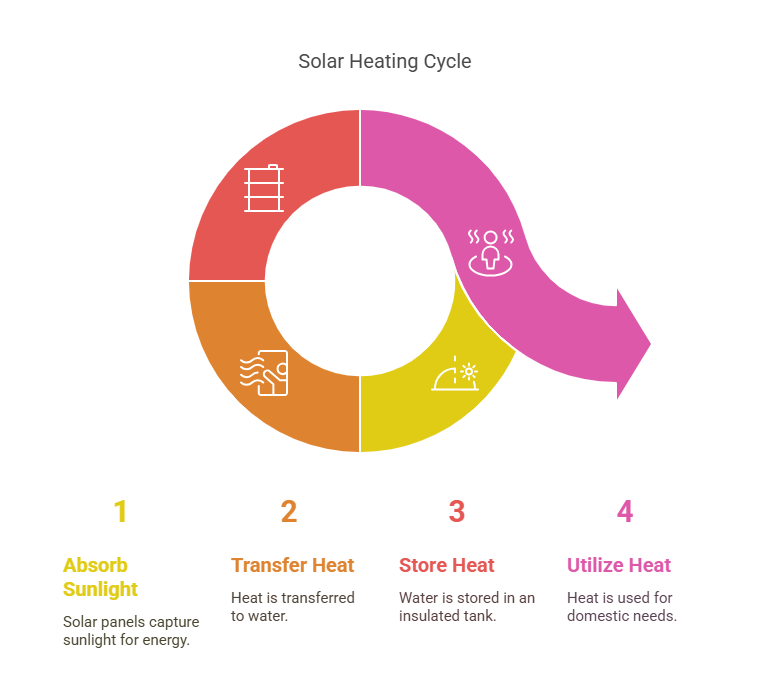
How Solar Heaters Work
Solar thermal panels absorb sunlight, transferring heat to water stored in an insulated tank. Even on cloudy days, they capture 60–70% of available solar energy.
Eimex Solar’s Top Picks
SunStream 200L:
- Perfect for 3–4 people.
- Saves Rs.2,500+ monthly.
- 5-year warranty on panels.
HybridHeat 300L:
- Solar + electric backup.
- 70% savings in summer, 50% in monsoon.
- Smart app controls.
Government Subsidies
Under the Ministry of Energy, homeowners can claim 30–60% subsidies on solar water heaters. Eimex Solar helps with paperwork and installation!
Maintenance Checklist for Peak Efficiency
- Monthly: Check for leaks or unusual noises.
- Every 6 Months: Flush sediment from the tank.
- Annually: Test the pressure valve and inspect insulation.
FAQs
What’s the best water heater for a family of 6?
Opt for a 300L+ solar geyser (like Eimex Solar’s HybridHeat 300L) paired with a timer for off-peak electric use.
Can I retrofit my electric geyser with solar panels?
Yes! Eimex Solar offers retrofit kits to upgrade existing geysers with solar thermal panels.
How long do solar water heaters last?
15–20 years with proper maintenance—far longer than electric or gas geysers.
Conclusion
Saving electricity with your geyser isn’t about cold showers or sacrifices—it’s about working smarter. From tweaking temperature settings to adopting solar solutions from Eimex Solar, every step adds up. Ready to stop overpaying for hot water?
💡 Book a FREE consultation with Eimex Solar today and discover how their most efficient water heaters can cut your bills by 50% or more!